Bat Removal
Several bat species in Western North Carolina are federally protected. Exclusion timing matters, NC maternity season restrictions run May 1 through August 15. We schedule the work correctly.
Bat Removal You Can Count On
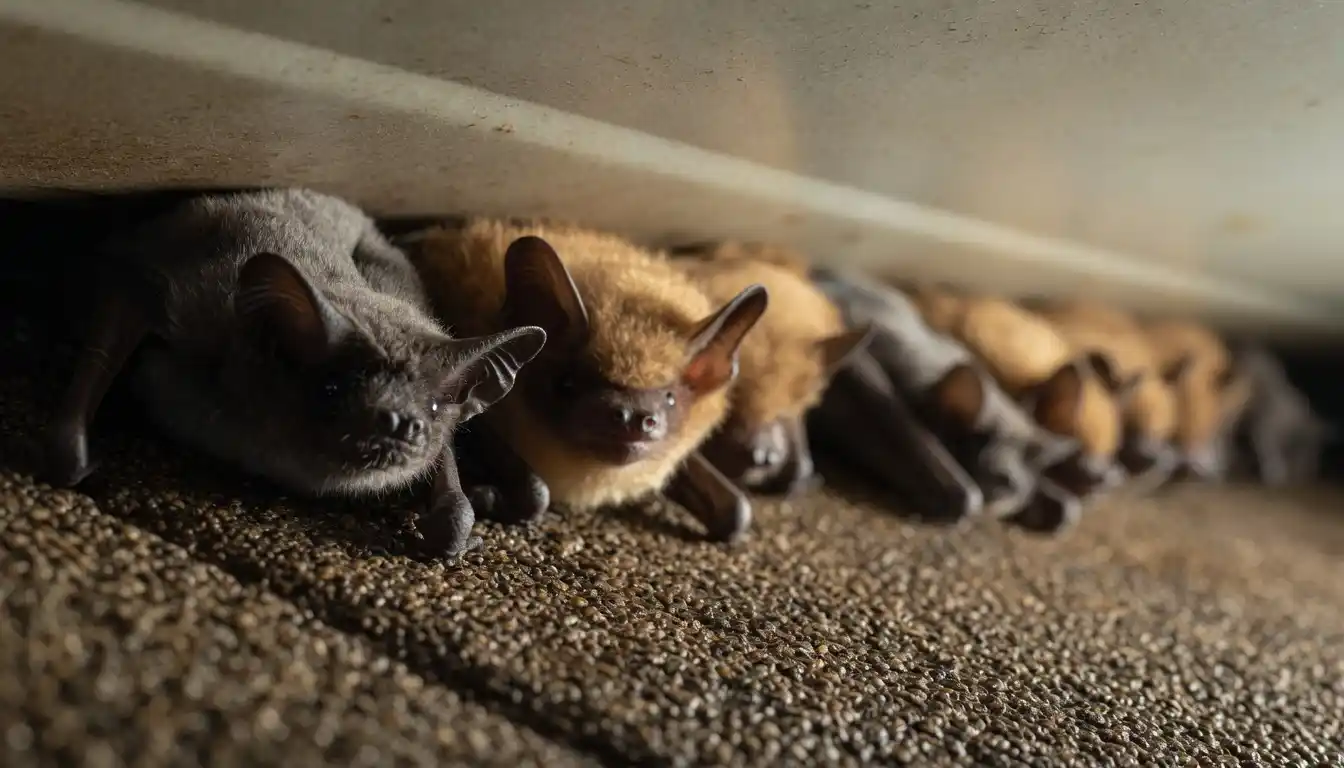
Western North Carolina is home to several bat species, including the little brown bat, big brown bat, and tri-colored bat, the last of which is federally listed as endangered under the Endangered Species Act. All bat exclusion in North Carolina must be performed outside the maternity season, which runs from May 1 through August 15; performing exclusion during this window can seal juvenile bats inside the structure, compounding the problem and creating potential regulatory liability. Entry points used by bats are often surprisingly small, gaps of three-eighths of an inch at fascia returns, chimney flashing separations, and open soffit vents are all common access sites. Guano accumulation in an active roost is a serious health concern: the fungus Histoplasma capsulatum, which causes respiratory illness, can grow in bat droppings. HEPA-filtered equipment and respiratory protection are required for any cleanup involving significant guano accumulation. We assess the roost, identify the species, schedule exclusion correctly, and install guano-blocking one-way devices that allow bats to leave but not re-enter.
Nuisance Wildlife NC serves homeowners across Western North Carolina. Work is performed in accordance with applicable North Carolina and federal wildlife regulations. We inspect, remove, and exclude. Every job comes with a plan that prevents the animals from returning.
Bat Removal Across Western North Carolina
We handle bat removal for homeowners across Western North Carolina. Select your town:
Common Bat Removal Problems We Fix
If you are experiencing any of these, call us. We respond promptly and explain the options.
Bat Removal - Questions & Answers
How quickly can you respond to a wildlife problem?
Response time depends on the nature and severity of the situation. We do our best to schedule an inspection within 24 to 48 hours for most calls. If a bat is inside your living space or you have a safety concern involving a venomous snake or rabies-vector animal, mention that when you call and we will prioritize accordingly. Contact us at 828-538-1980.
What are the signs that I have wildlife in my attic?
The most common signs are sounds, scratching, thumping, running noises, or chittering in the ceiling or attic, especially around dawn and dusk for raccoons and bats, or during the day for squirrels. You may also notice damaged soffits or fascia visible from the ground, an ammonia-like odor coming from above, or dark staining on the ceiling. A visual inspection from the ground sometimes reveals a torn soffit panel or an obvious entry hole at the roofline.
Can wildlife actually damage my home?
Yes and the damage compounds quickly. Raccoons tear apart insulation and contaminate it with roundworm eggs that remain viable for years. Squirrels chew electrical wiring inside attic insulation, creating a fire hazard that may not be visible until significant damage has occurred. Bats deposit guano that can support Histoplasma fungal growth. Skunks and opossums in crawlspaces damage vapor barriers and leave behind contaminated insulation. The longer any animal remains, the more expensive the remediation becomes.
Can you remove wildlife during breeding season?
It depends on the species. North Carolina law and federal protections restrict certain removal methods during maternity seasons. Bat exclusion cannot be performed between May 1 and August 15 while young, non-flying bats are present. This is a firm restriction under NC Wildlife Resources Commission guidance. Raccoon litters typically delay full exclusion until the young are mobile, around 8 to 10 weeks of age. We evaluate timing during the inspection and explain what can and cannot be done immediately for your specific situation.
Do you clean up after wildlife removal?
Cleanup is available and is strongly recommended for any infestation that lasted more than a few weeks. Droppings, urine-soaked insulation, and nesting material can harbor pathogens and attract new animals to the same location. We remove contaminated materials, treat exposed surfaces with enzyme-based deodorizers, and coordinate insulation replacement where needed. For bat guano and raccoon latrines, appropriate protective equipment is used throughout the process.
More Wildlife Removal Services
🦝 Raccoon Removal
Raccoons are the most common wildlife call in Western North Carolina. We locate every e...
🐿️ Squirrel Removal
Eastern gray squirrels chew through soffits, fascia, and attic vents to nest inside WNC...
🐍 Snake Removal
North Carolina has 37 native snake species, including 6 venomous ones. We identify the ...
🐦 Bird Control
House sparrows, European starlings, and pigeons cause real damage to WNC properties. Al...
🦨 Skunk Removal
Striped and spotted skunks both live in WNC and dig dens under decks, porches, and slab...
🐾 Opossum Removal
Virginia opossums are common throughout WNC and frequently enter crawlspaces, sheds, an...
🏠 Attic Wildlife Removal
Many WNC homes have multi-species attic infestations. A proper removal starts with iden...
🔒 Wildlife Exclusion & Entry-Point Sealing
Animals re-enter homes through openings they already know. We seal every gap using heav...
🧹 Wildlife Damage Cleanup & Sanitation
Raccoon latrines, bat guano, and contaminated insulation carry serious health risks lon...
Need Bat Removal Today?
Call now or request removal online. Fast response, professional, and humane.