Skunk Removal
Striped and spotted skunks both live in WNC and dig dens under decks, porches, and slabs. Spray from a denning skunk can penetrate the home. We remove and install lasting barriers.
Skunk Removal You Can Count On
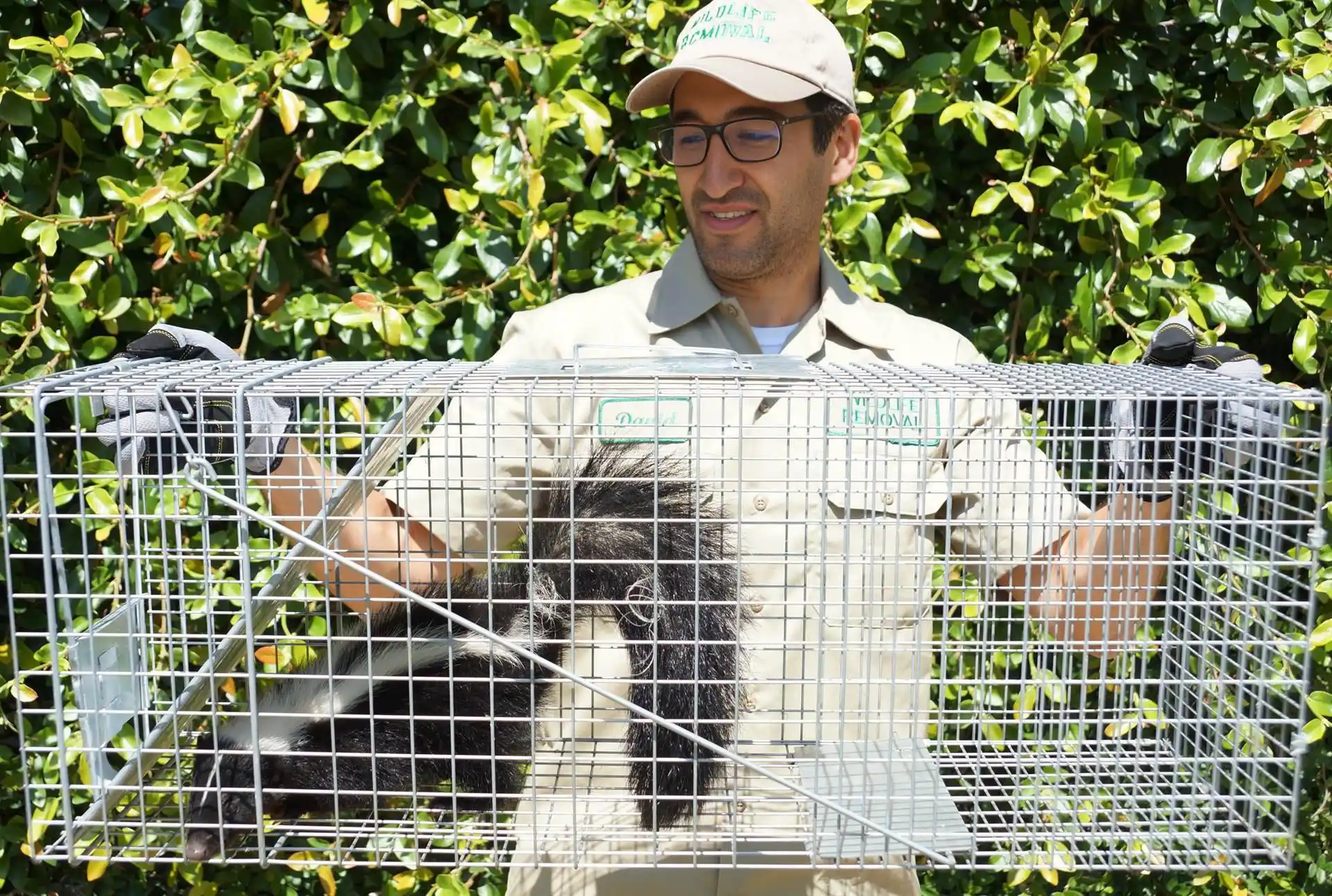
Both the striped skunk and the smaller Eastern spotted skunk are present in Western North Carolina, and both species are classified as rabies-vector animals under state law. Skunks typically excavate dens under porches, concrete pads, crawlspace entries, decks, and building additions, digging a burrow 5 to 10 feet into the ground, often with multiple entrances. Spray emitted near or under a foundation can penetrate a home through crawlspace vents and cause odor throughout the living space for days. We live-trap skunks with appropriate equipment that minimizes disturbance during removal, and we install L-shaped hardware cloth barriers buried along the perimeter of the excavation site to prevent re-digging after removal. Properties adjacent to agricultural fields, creek corridors, and wooded forest edges are most frequently affected in spring and fall, when skunk activity peaks around breeding season and pre-winter denning.
Nuisance Wildlife NC serves homeowners across Western North Carolina. Work is performed in accordance with applicable North Carolina and federal wildlife regulations. We inspect, remove, and exclude. Every job comes with a plan that prevents the animals from returning.
Skunk Removal Across Western North Carolina
We handle skunk removal for homeowners across Western North Carolina. Select your town:
Common Skunk Removal Problems We Fix
If you are experiencing any of these, call us. We respond promptly and explain the options.
Skunk Removal - Questions & Answers
Can wildlife actually damage my home?
Yes and the damage compounds quickly. Raccoons tear apart insulation and contaminate it with roundworm eggs that remain viable for years. Squirrels chew electrical wiring inside attic insulation, creating a fire hazard that may not be visible until significant damage has occurred. Bats deposit guano that can support Histoplasma fungal growth. Skunks and opossums in crawlspaces damage vapor barriers and leave behind contaminated insulation. The longer any animal remains, the more expensive the remediation becomes.
Do you work in attics and crawlspaces?
Yes. Attics and crawlspaces are among the most common work environments for wildlife removal in Western North Carolina. We carry proper protective equipment for contaminated confined spaces. Before entering, we assess what is present, both the animals and the condition of the space and explain what cleanup and repair will involve before any work begins.
Can you remove wildlife during breeding season?
It depends on the species. North Carolina law and federal protections restrict certain removal methods during maternity seasons. Bat exclusion cannot be performed between May 1 and August 15 while young, non-flying bats are present. This is a firm restriction under NC Wildlife Resources Commission guidance. Raccoon litters typically delay full exclusion until the young are mobile, around 8 to 10 weeks of age. We evaluate timing during the inspection and explain what can and cannot be done immediately for your specific situation.
Do you offer free estimates?
We can often discuss a general cost range by phone for simple, common situations. Accurate pricing for exclusion and repair work, however, requires an on-site inspection. Wildlife removal is not a standard product, cost depends on the species, the number of entry points found, the roof and attic access, and the extent of any existing damage. We explain the cost in full before any work begins and do not proceed without your approval.
How much does wildlife removal cost in Western North Carolina?
Cost varies based on the species involved, the number and location of entry points, the extent of structural damage or contamination, and whether cleanup or insulation replacement is needed. There is no flat rate for wildlife work because every property and every situation is different. We provide a clear, itemized estimate after the inspection so you know exactly what you are paying for and why before any work begins.
More Wildlife Removal Services
🦝 Raccoon Removal
Raccoons are the most common wildlife call in Western North Carolina. We locate every e...
🐿️ Squirrel Removal
Eastern gray squirrels chew through soffits, fascia, and attic vents to nest inside WNC...
🦇 Bat Removal
Several bat species in Western North Carolina are federally protected. Exclusion timing...
🐍 Snake Removal
North Carolina has 37 native snake species, including 6 venomous ones. We identify the ...
🐦 Bird Control
House sparrows, European starlings, and pigeons cause real damage to WNC properties. Al...
🐾 Opossum Removal
Virginia opossums are common throughout WNC and frequently enter crawlspaces, sheds, an...
🏠 Attic Wildlife Removal
Many WNC homes have multi-species attic infestations. A proper removal starts with iden...
🔒 Wildlife Exclusion & Entry-Point Sealing
Animals re-enter homes through openings they already know. We seal every gap using heav...
🧹 Wildlife Damage Cleanup & Sanitation
Raccoon latrines, bat guano, and contaminated insulation carry serious health risks lon...
Need Skunk Removal Today?
Call now or request removal online. Fast response, professional, and humane.