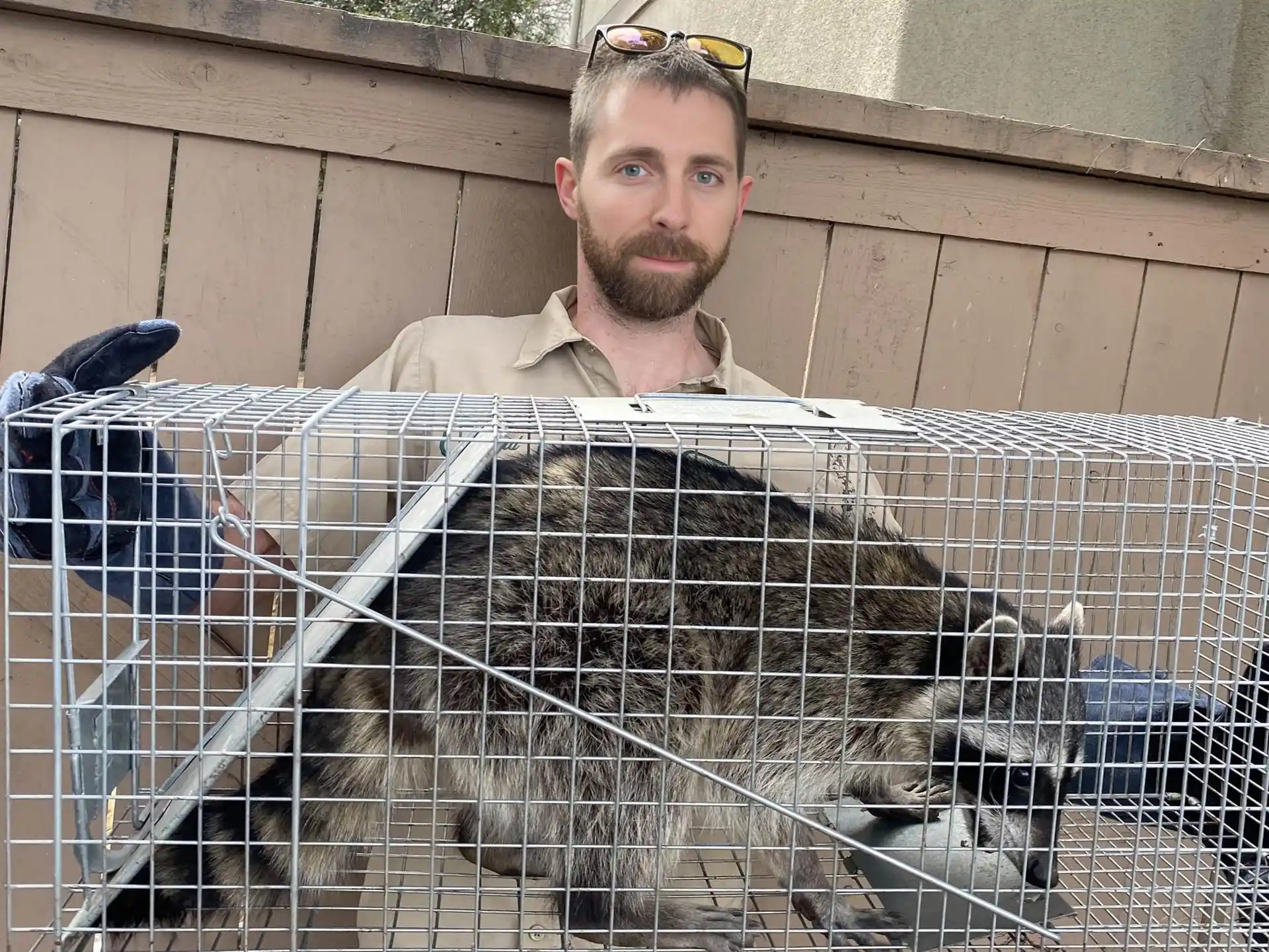
Raccoons are the most destructive and most common attic invader in Western North Carolina. They tear apart insulation, contaminate the space with roundworm eggs, and can collapse a soffit panel on a property that hasn't been inspected in years. The problem is that most of the signs develop slowly; by the time homeowners notice them, significant damage has already occurred.
1. Thumping or Heavy Footsteps Overhead
Raccoons are large animals, and they move like it. A single adult raccoon in an attic sounds like a person walking slowly across the floor, heavy, deliberate footsteps that you might notice in the evening after dark or just before dawn. If the sound is lighter and faster, like scratching or scrambling, squirrels are more likely. The timing matters: raccoons are primarily nocturnal, so activity concentrated after dark is a strong indicator.
2. Damaged Soffit, Fascia, or Roof Return
Inspect your roofline from the ground with binoculars. Look for soffit panels that have been pushed inward, torn, or separated at the seam. Raccoons typically push through rather than chew through, creating a gap that is larger and more irregular than a squirrel's chewed entry. The damage is often found at the corner where a soffit meets a gable, or where a porch roof meets the main roofline.
3. A Strong Ammonia Odor in the Upper Floor
A raccoon latrine, a concentrated area of droppings and urine, develops quickly in an attic. The ammonia odor can permeate through the ceiling drywall and become noticeable in the room below. If you smell something persistent and foul in an upper-floor bedroom or hallway that you cannot locate, it often originates above the ceiling.
4. Staining on the Ceiling
Urine from a raccoon den soaks through insulation and eventually stains drywall. A dark, irregular stain on the ceiling that appeared without any roof leak is a strong sign that animals are present overhead. This kind of staining is often mistaken for a plumbing leak until the source is investigated.
5. Evidence of Foraging Activity Around the Home
Knocked-over garbage cans, scattered compost, scattered bird feeder seed, or disturbed pet food left outside at night are all signs that a raccoon is active on the property. An animal feeding from your yard or trash is likely also exploring the roofline for a den site, especially in late winter and early spring when pregnant females seek attic space to raise their litters.
What to Do If You Find These Signs
Do not attempt to seal the entry point yourself before the animals are out. Sealing the opening while a mother is inside with her young can result in the young animals dying inside the structure, which creates an odor problem that is far worse than the original infestation. Call a professional who will inspect the space, confirm whether young are present, and plan the removal accordingly.
Raccoons in Western North Carolina can be present in the attic from late winter through fall. Maternity season, when nursing mothers are present, typically runs from March through May in the mountains. Early action before denning begins is always better than waiting.