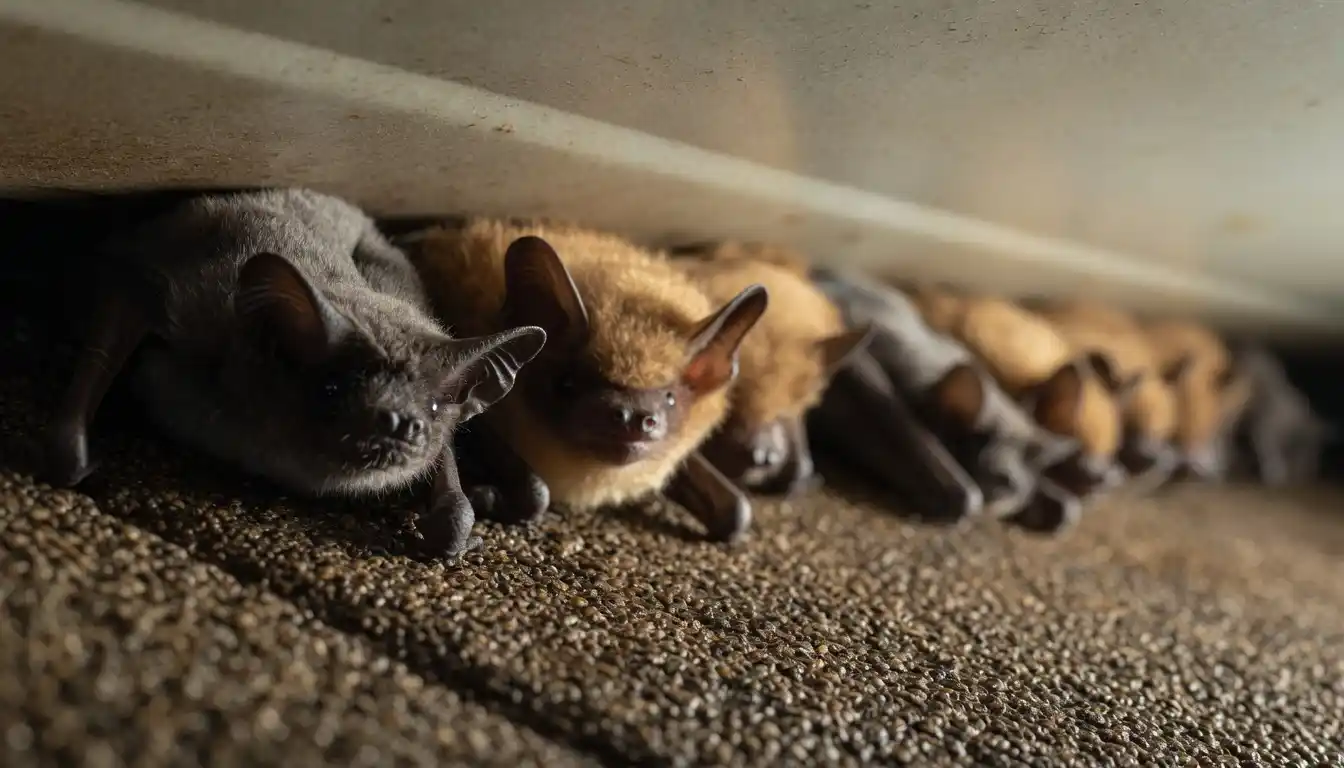
Of all the wildlife removal situations homeowners encounter, bat infestations require the most careful and legally informed response. The reasons are straightforward: several NC bat species are federally protected, removal timing is regulated by law, and the cleanup process involves genuine health hazards. Attempting bat removal without the right knowledge and equipment can make the situation worse in all three dimensions.
North Carolina's Bat Species and Their Protected Status
Western North Carolina is home to several bat species, including the little brown bat (Myotis lucifugus), big brown bat (Eptesicus fuscus), Eastern small-footed bat (Myotis leibii), and the tri-colored bat (Perimyotis subflavus). The tri-colored bat is federally listed as endangered under the Endangered Species Act due to population collapse from white-nose syndrome, a fungal disease that has devastated bat populations across the eastern United States. Harming, killing, or disturbing a tri-colored bat without authorization is a federal violation.
The Maternity Season Restriction
Under North Carolina Wildlife Resources Commission guidance, bat exclusion work should not be performed during the maternity season, typically May 1 through August 15. During this period, juvenile bats are present in roosts and are incapable of flight. If a one-way exclusion device is installed while juveniles are inside, the adults exit but cannot return to nurse, and the juveniles die inside the structure. The result is a serious odor problem and a regulatory problem. Exclusion performed outside the maternity season, in early spring or in the fall after juveniles have become fully mobile, avoids this outcome.
Health Risks of Bat Guano
Bat guano accumulation in an attic or wall cavity creates a genuine health hazard. The fungus Histoplasma capsulatum grows in soil and organic material enriched by bat droppings. When guano is disturbed, by foot traffic, renovation, or improper cleanup, Histoplasma spores can become airborne and be inhaled. Histoplasmosis causes flu-like symptoms in healthy individuals but can be serious in immune-compromised people. Cleaning up a significant bat guano accumulation requires respiratory protection (N95 or better), protective clothing, and either HEPA filtration or careful wet methods to prevent spore dispersal.
The Rabies Risk Is Real but Manageable
Bats are one of the primary rabies-vector species in North Carolina. If a bat is found inside your living space, particularly if sleeping people or children were in the room overnight, public health guidelines recommend contacting your county health department for guidance on post-exposure evaluation. You do not need to touch or handle the bat yourself; we can assist with capture for testing if needed.
What a Professional Bat Removal Involves
A proper bat exclusion job involves inspecting the entire structure to find every gap that bats are using, installing one-way exclusion devices over the primary exits, waiting for the bats to evacuate over several nights, removing the devices, and permanently sealing all entry points. This is followed by guano cleanup and assessment of the insulation for replacement. The entire process, when timed correctly, typically takes place over two to three visits.