Finding droppings in an attic or on an exterior wall is a common way homeowners first discover a wildlife problem. The two most frequently confused dropping types are bat guano and mouse droppings; they can look similar at first glance, but they have distinct differences that affect both the cleanup approach and the removal strategy significantly.
Visual Comparison
Bat Droppings (Guano)
- Size: Similar to mouse droppings, 1/4 to 3/8 inch long, thin and tapered at the ends.
- Color: Dark brown to black when fresh; may appear more dried and crumbly with age.
- Texture: This is the key distinction: bat guano crumbles easily when touched with a pen or stick and has a slightly shiny, speckled appearance from insect wing fragments. It turns to powder when pressed.
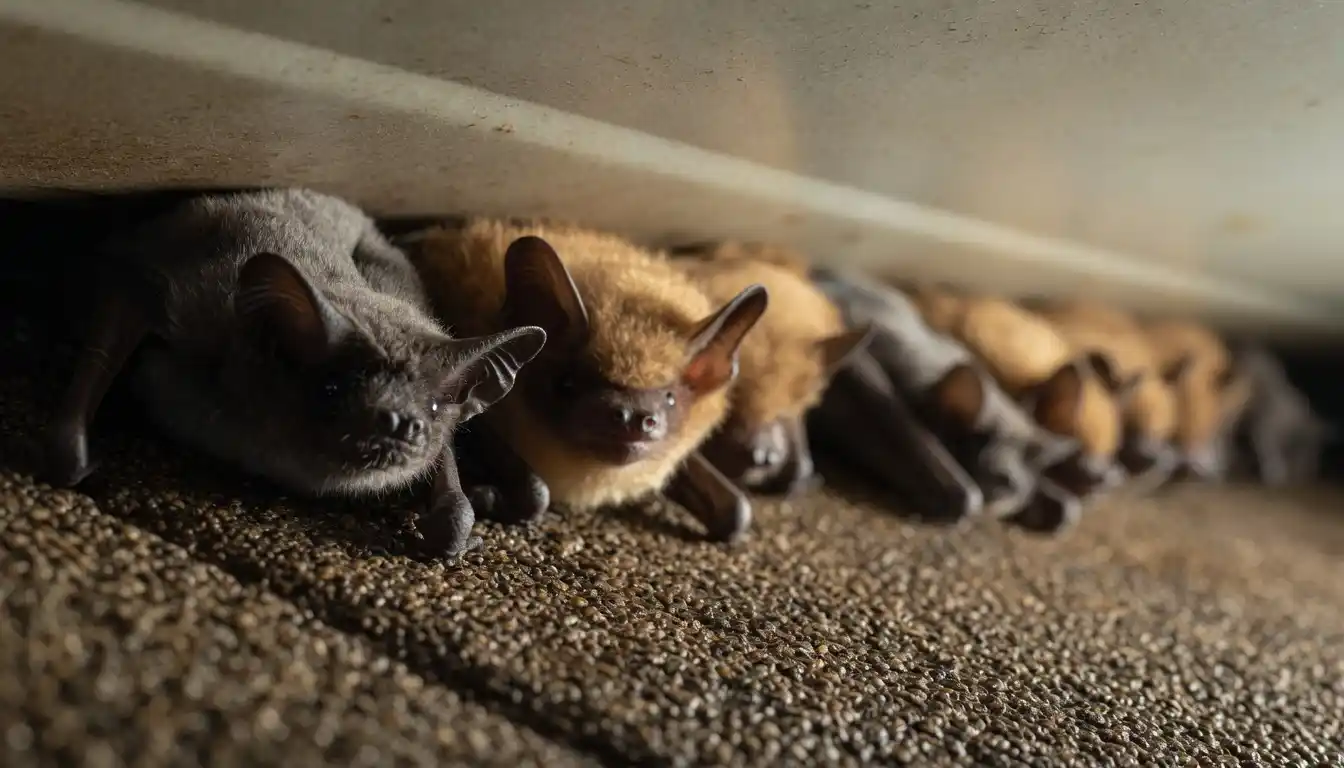
- Location: Found in accumulations directly below the entry point or roosting area. Often in piles on attic insulation, on top of rafters, or on horizontal surfaces directly below the roost. May also be found on exterior walls directly below a gap the bats use to exit.
Mouse Droppings
- Size: Slightly smaller and more uniform than bat guano, 1/8 to 1/4 inch.
- Color: Dark brown to black when fresh; turns gray and hard with age.
- Texture: Mouse droppings are firm and do not crumble when pressed. They may feel waxy or plasticky rather than powdery.
- Location: Found in travel routes, along walls, in drawers, under appliances, in cabinets. Scattered along frequently used paths rather than piled beneath a roosting area.
Why It Matters
Bat guano requires specific cleanup protocols because it can harbor Histoplasma capsulatum spores. Disturbing a significant guano accumulation without respiratory protection is a genuine health risk. Bat guano cleanup requires HEPA-filtered vacuum equipment or careful wet methods to prevent spore dispersal. Mouse droppings are also a disease concern, hantavirus, leptospirosis, but the cleanup protocol is different and generally less specialized.
The removal strategy is also different: bats require timed exclusion that accounts for NC maternity season restrictions, while mice are typically addressed with trapping and structural exclusion at any time of year.
If you are unsure which type of droppings you have found, collect a sample in a sealed plastic bag for identification before beginning any cleanup, and do not disturb a large accumulation before knowing what you are dealing with.