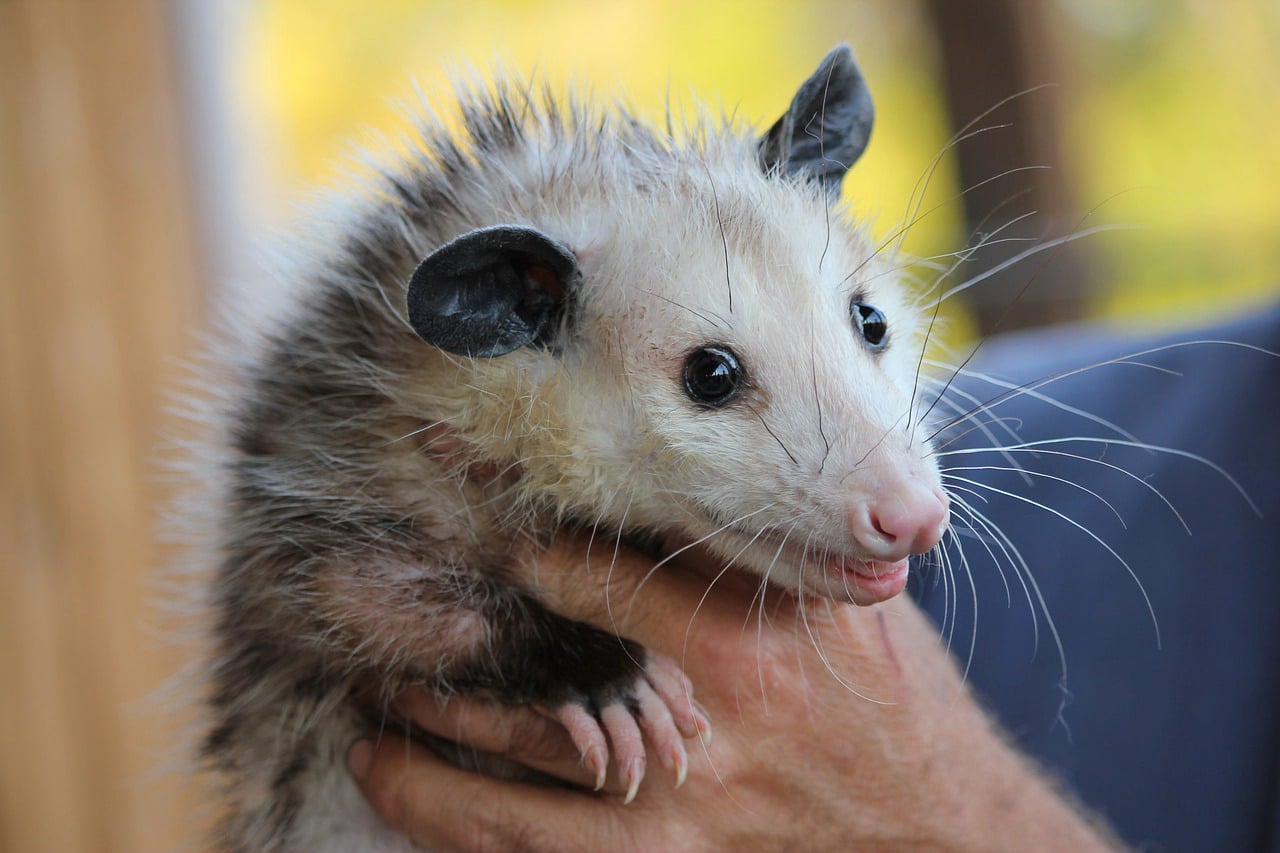
The Virginia opossum is the only marsupial native to North America, and it is a common sight on Western North Carolina properties after dark. Despite their appearance (rat-like face, pink nose, bald tail, slow movement), opossums are genuinely beneficial animals in many contexts. They consume large quantities of ticks, carry very few disease risks, and rarely cause the kind of structural damage that raccoons or squirrels do. Knowing how to respond when you encounter one makes a real difference.
Are Opossums Dangerous?
Opossums are one of the few wildlife species in North Carolina that are not classified as rabies-vector animals. Their body temperature is too low to sustain the rabies virus, which means the risk of rabies transmission from an opossum is extremely low, far lower than from raccoons, foxes, or skunks. They can bite if cornered or handled, and they can carry other parasites, but they are not an aggressive species and rarely pose a direct threat to people or pets.
Why Is the Opossum "Playing Dead"?
The famous opossum defense response, falling on its side, going limp, and emitting a foul odor from anal glands, is an involuntary physiological reaction, not a deliberate strategy. An opossum in this state is temporarily unresponsive but not dead. It may remain in this state for minutes to hours before recovering. Do not move or handle an opossum in this condition; simply leave it alone and it will move on.
When Opossums Become a Problem
Opossums become nuisance animals when they take up residence in crawlspaces, under decks, inside sheds or garages, or in spaces near accessible food sources. A denning opossum leaves behind nesting material, droppings, and a distinctive odor. They can also damage crawlspace vapor barriers and insulation when nesting.
What to Do
If an opossum is in the yard and moving on its own, leave it alone; it will move on. If it appears injured or has been there more than 24 hours without moving, contact a licensed wildlife rehabilitator. If an opossum has established a den inside your crawlspace or outbuilding, live trapping and exclusion of the access point is the appropriate response. Remove food attractants: secure garbage cans, bring in pet food at night, and keep compost in sealed containers.
Young Opossums
Opossums give birth to extremely underdeveloped young that immediately crawl to the mother's pouch. Juveniles that have separated from the mother but are more than 7 inches from nose to tail tip can survive on their own. Smaller juveniles that are separated need wildlife rehabilitation care. If you find a small juvenile opossum alone, contact a local wildlife rehabilitator before attempting to care for it yourself.