Bat Removal in Western NC
Bat exclusion in Western North Carolina is time-sensitive. There is a hard window when exclusion cannot be done legally or humanely. We assess the colony, plan around the season, and perform exclusion that keeps bats out permanently.
Professional Bat Removal in Western North Carolina
Bats are protected wildlife in North Carolina. They cannot be killed, trapped, or relocated. The only legal and humane method of removal is exclusion using one-way devices that allow bats to exit but not return. Western North Carolina is home to several bat species, including the tri-colored bat, which was listed as federally endangered under the Endangered Species Act in 2022 and is present in WNC. Any work near or involving bat colonies requires awareness of these protections.
Signs You Have Bats
- Guano accumulation on exterior walls, windowsills, or at the base of the structure directly below the roofline
- Dark, greasy staining at entry points (bats leave oil from their fur as they squeeze through)
- Squeaking or rustling sounds at dusk and just before dawn
- Bats exiting from the same spot each evening at dusk
- Musty or ammonia-like odor coming from the attic or walls
Common Entry Points
- Gaps as small as 3/8 inch along the roofline, under ridge caps, and between sheathing and soffit
- Loose flashing or lifted shingles near the peak
- Open gable vents without fine screening
- Gaps around chimneys, pipes, and utility penetrations
- Cracks in mortar on stone or brick structures
Damage and Health Risks
Bat guano accumulates over years and saturates insulation, wood, and drywall. Large accumulations support the growth of Histoplasma capsulatum, a fungus that causes histoplasmosis in humans when disturbed guano is inhaled. Bats are also a rabies vector species in North Carolina, though the actual incidence of rabies in WNC bat populations is low. Any bat found inside the living area of a home should be tested, particularly if it may have had contact with a sleeping person.
Seasonal Notes for Western NC and the Maternity Window
Bat exclusion cannot be performed between May 1 and August 15 in Western North Carolina. During this period, female bats have given birth and the juveniles are non-flying inside the roost. Sealing entry points during this window traps juveniles inside, where they die, creating an odor problem and a health hazard. Work must be completed before May 1 or after August 15. We strongly recommend a spring inspection and assessment before the maternity window opens, so that a plan is in place the moment the exclusion window opens in late August.
What To Do
- Call for an assessment as early in spring as possible; scheduling is critical given the maternity window
- If a bat is inside your living space, do not release it outdoors if anyone may have had contact with it while sleeping. Contact your county health department.
- Keep interior doors closed to prevent bats from entering the living area
What Not To Do
- Do not attempt exclusion between May 1 and August 15. It is both inhumane and likely to violate state and federal wildlife protections.
- Do not attempt to handle bats with bare hands
- Do not use pesticides or poisons. They are not effective for bats and may violate federal law.
- Do not seal all entry points at once without one-way exclusion devices in place first. This traps the colony inside.
Our Bat Removal Services
Every removal comes with an inspection and exclusion plan. These are the services typically involved.
🦝 Raccoon Removal
Raccoons are the most common wildlife call in Western North Carolina. We locate every entry ...
🐿️ Squirrel Removal
Eastern gray squirrels chew through soffits, fascia, and attic vents to nest inside WNC home...
🦇 Bat Removal
Several bat species in Western North Carolina are federally protected. Exclusion timing matt...
🐍 Snake Removal
North Carolina has 37 native snake species, including 6 venomous ones. We identify the speci...
🐦 Bird Control
House sparrows, European starlings, and pigeons cause real damage to WNC properties. All nat...
🦨 Skunk Removal
Striped and spotted skunks both live in WNC and dig dens under decks, porches, and slabs. Sp...
🐾 Opossum Removal
Virginia opossums are common throughout WNC and frequently enter crawlspaces, sheds, and gar...
🏠 Attic Wildlife Removal
Many WNC homes have multi-species attic infestations. A proper removal starts with identifyi...
🔒 Wildlife Exclusion & Entry-Point Sealing
Animals re-enter homes through openings they already know. We seal every gap using heavy-gau...
🧹 Wildlife Damage Cleanup & Sanitation
Raccoon latrines, bat guano, and contaminated insulation carry serious health risks long aft...
Bat Removal Questions
Exclusion must be completed before May 1 or after August 15. These are the boundaries of the maternity season in WNC's mountain counties, during which juvenile bats are present and non-flying inside the roost. Outside this window, exclusion can proceed with one-way devices installed over the primary entry points.
One-way exclusion devices are typically left in place for at least five to seven days to allow the colony to fully exit. Permanent sealing follows once activity has stopped. Larger colonies may require longer observation periods.
Yes. The tri-colored bat (Perimyotis subflavus) was listed as federally endangered in 2022 and has been documented in Western North Carolina. This does not mean every bat colony in WNC is a tri-colored bat colony, but it adds another layer of reason to handle bat work carefully and in compliance with both state and federal regulations.
No. Bats cannot be trapped and relocated under North Carolina or federal law. Exclusion is the only legal and effective option. Bats are guided out of the structure by one-way devices and must find alternate roosting on their own.
Related Articles
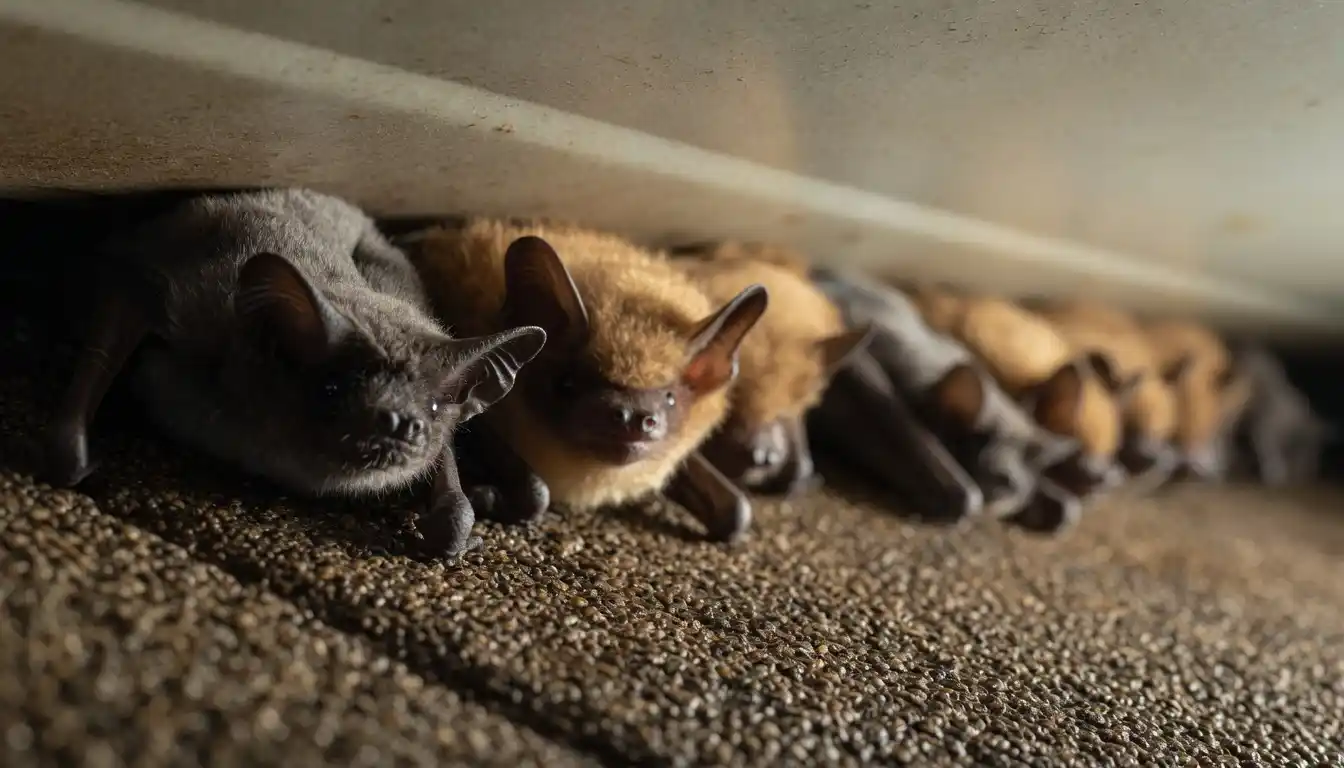
Why Professional Bat Removal Is Essential for Your Safety
Bat removal in North Carolina has strict legal timing and species-specific requirements. Getting ...
Read more →
Snake Identification and Safe Removal Tips for Western NC
North Carolina has 37 native snake species, 6 of them venomous. Here is how to identify common mo...
Read more →
When to Call a Professional Wildlife Removal Service
Some wildlife situations you can resolve yourself. Others require a professional. Here is how to ...
Read more →Ready to Get Started?
Call or request removal online. We respond promptly, inspect thoroughly, and give you a clear plan before any work begins.